What Percent of Trans People Are Estranged From Their Family
The truth about family estrangement
(Prototype credit:
BBC/Getty
)
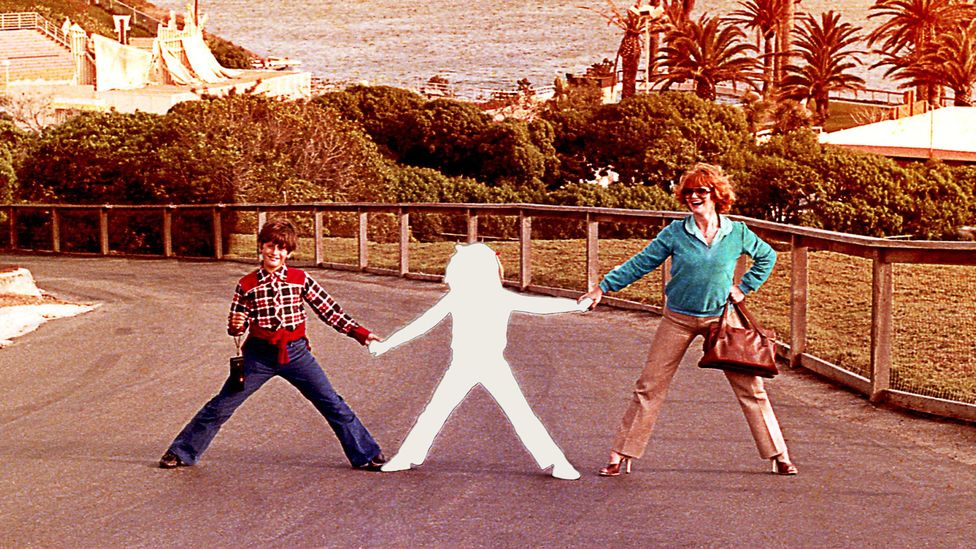
Being estranged from a relative comes with myths – and stigma. But it'south more common, and in some cases can exist healthier, than you might think.
I
Information technology's often said that food brings people together. Just it can also split families apart.
Cookbook writer Nandita Godbole has experienced this beginning-hand. Her affluent Indian family, who by and large had hired cooks in their homes, disapproved of her choice of profession. By working with food, she was going against their expectations. When Godbole'south recent book Ten 1000 Tongues: Secrets of a Layered Kitchen delved deep into family history, she met even more than resistance.
Clearly, this wasn't simply about the food. By irresolute traditional recipes – and exploring parts of her family history that others felt ownership over – she was perceived as challenging family hierarchies. Some relatives stopped speaking to her.
Godbole's story may exist unique. Merely her experience of disconnection from her family is far from unusual.
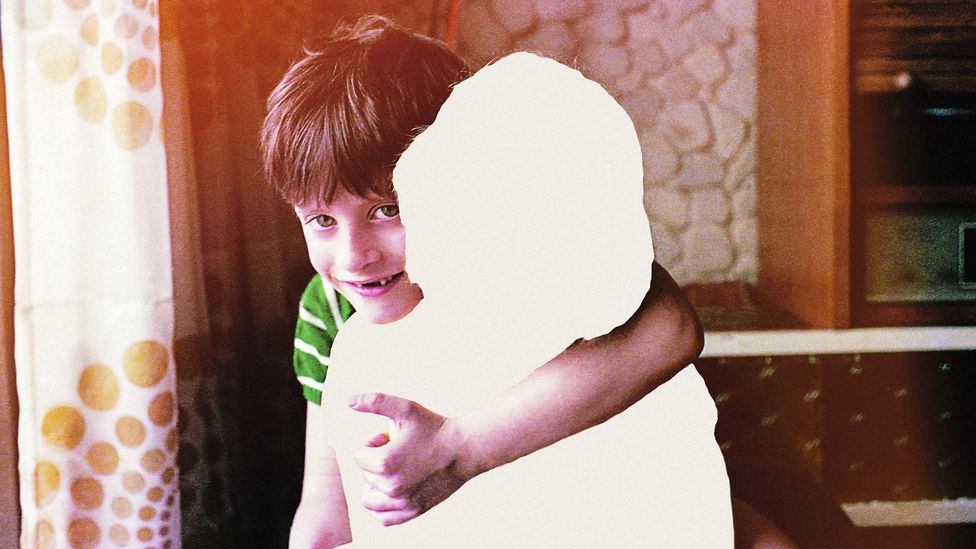
Estrangement is more commonly discussed now than in the by (Credit: BBC/Getty)
Stand Lonely founder Becca Banal, who has personal experience of estrangement equally she has no contact with her parents, has also noticed that the topic is much more than discussed now than information technology was fifty-fifty five years agone. This is borne out by Google Trends data showing steady growth in people searching for estrangement-related terms, primarily in Canada, Australia and Singapore.
"I think Meghan Markle and the purple family have definitely made family unit estrangement news," says Bland. The Duchess of Sussex, who in 2018 was the about Googled person in the UK (and 2nd near Googled person in the US), has driven contempo conversation effectually circuitous families due to her ain difficult relationship with her begetter. So accept other celebrities like Anthony Hopkins, who acknowledged in a 2018 interview that he'due south barely spoken with his girl in two decades. Celebrity gossip tin be a useful style for ordinary people to process and explicate their own life experiences.
Yous might also like:
• The underground to living a meaningful life
• How anxiety warps your perception
• The fourth dimension our personality changes nigh
Though examples of estrangement can be constitute around the globe, it's more than common in some societies than others.
I factor seems to be whether a regime offers strong support to residents. In countries with robust welfare systems, people simply demand their families less – giving them more choice over whether to maintain ties. In Europe, for instance, older parents and adult children tend to collaborate more and live closer to each other in countries further south, where public assistance is more than limited.
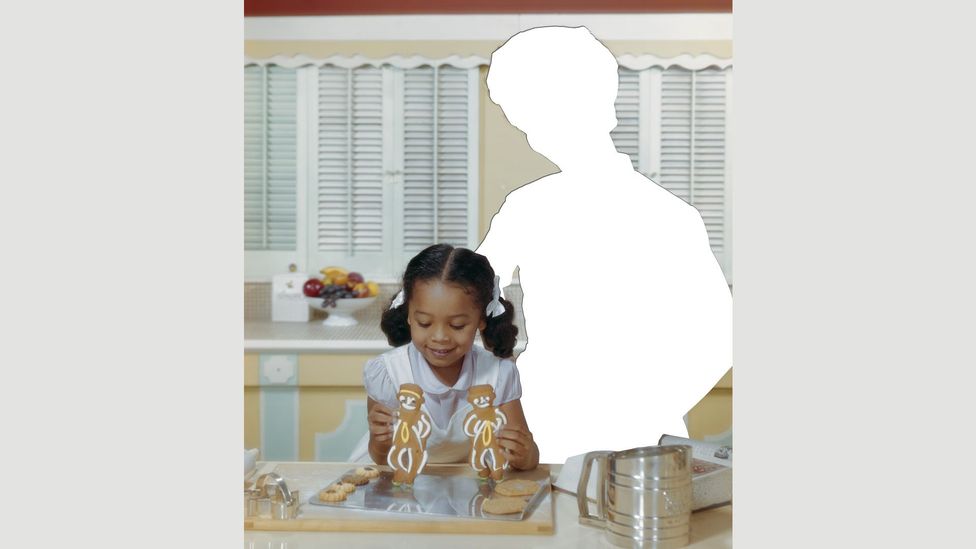
Estrangement is more mutual in countries with robust welfare systems, but that doesn't mean governments should limit fiscal back up (Credit: BBC/Getty)
Financial factors also intersect with other factors, such as education and race. In Germany, college education levels of adult children are associated with higher rates of conflict with their parents. One theory is that highly educated family members are likely to be more than geographically mobile, and less likely to demand each other financially.
The research of Megan Gilligan and colleagues, on caregiving-related disharmonize in US families, has shown racial differences in the experiences of adult children. Simply information technology can be hard to separate out the influences of civilisation and class. Gilligan, a gerontologist at Iowa State University, notes that in the Us, "minority families tend to co-reside more than; they tend to be more than reliant on exchanges".
In Uganda, family unit estrangement is on the rising, says Stephen Wandera, a demographer at Makerere University in Kampala. Ugandan families accept traditionally been large and extended – which proved crucial in recent decades as family members stepped in to care for people orphaned or devastated by civil state of war or Aids.
But in recent enquiry, Wandera and colleagues found that 9% of Ugandans aged 50 and over alive alone – a surprisingly loftier percent. That's non the same equally estrangement, of course. But Wandera says that every bit families get smaller and more nuclear, and as urbanisation increases, the prevalence of estrangement is likely to rising.
This won't be happening right away. "Cultural norms are nonetheless potent, and they accept fourth dimension to fade," he says. But Wandera expects modify within 20 years or and so.
As families get smaller and more than nuclear and as urbanisation increases, the prevalence of estrangement is likely to rise (Credit: BBC/Getty)
This doesn't mean that governments should limit financial support to older people to encourage stronger families. Spanish family unit culture has been chosen "more coercive" than, for example, Norway's, where intergenerational relationships are generally more amicable considering they're chosen and less financially pressured.
Why information technology happens
Divorce contributes to the loss of family relationships, particularly with fathers. So practise secrets. The abandonment of relatives with marginalised identities is also a mutual factor, such as family rejection of sexual and gender minorities in Vietnam.
But estrangement is often quiet and undramatic. Gilligan explains that it's typically gradual, rather than a big result. The people she's interviewed have often said "I don't quite know how this happened" rather than pointing to a specific incident, she says.
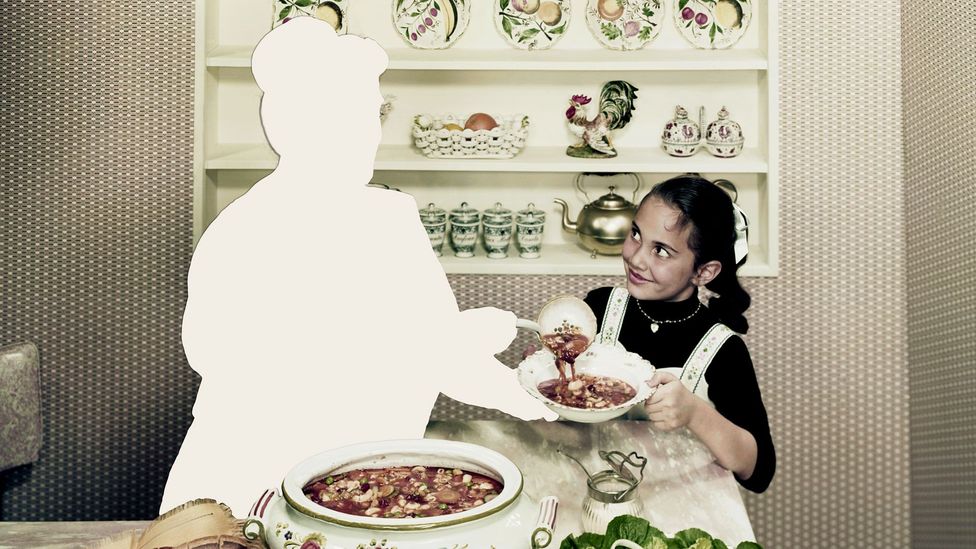
Estrangement is often gradual – but reflects long-lived tension (Credit: BBC/Getty)
Still, even if the triggers seem picayune, they reflect long-lived tension. Families looking to reconcile should recognise that conflicts are unlikely to be but about isolated incidents, so it could be helpful to appoint with the past.
For those seeking reconciliation – or to prevent estrangement to begin with – suspending judgement may too exist helpful. In her research with older mothers, x% of whom were estranged from an adult child, Gilligan found that the most significant factor in the estrangement was a mismatch in values. For example, "if the mother really valued the religious beliefs and practices and the kid had violated them, the mother… actually viewed it as offensive", she says.
Factors went beyond religion likewise. One mother who highly valued truthfulness cut off a son who told lies, while a mother who highly valued self-reliance stopped speaking with a daughter who she believed was dependent on a man.
In fact, these violations of what mothers saw as their personal values made estrangement even more likely than when in that location were societal norm violations – such as the child having committed a criminal offense. And this value congruence was more important to mothers than to fathers.
The mothers "were kind of describing the things they just couldn't let go [of] – things that had happened that had been upsetting to the mother", Gilligan says. "It just constantly kept coming upwardly in the relationships. And so they never got over it."
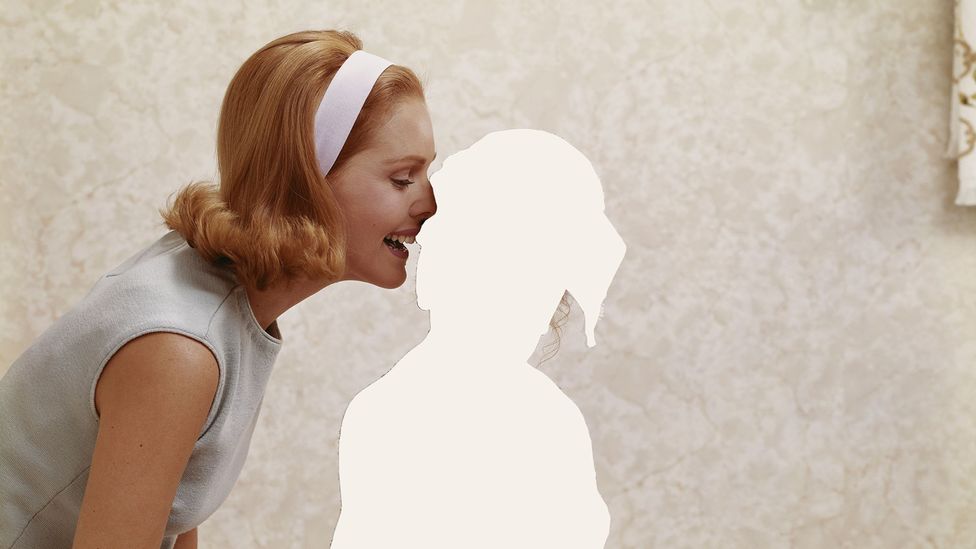
Developed children often mention emotional abuse as the cause of estrangement – but their parents rarely exercise (Credit: BBC/Getty)
And equally in the classic Japanese picture show Rashomon or the TV series The Affair, 2 people tin can have such different memories of the aforementioned feel that it's virtually as if information technology wasn't the same experience at all.
Adult children in the UK, for example, virtually oftentimes mention emotional abuse equally the cause of their estrangement from their parents. Only parents are much less likely to mention emotional corruption (which refers to persistent attempts at control through humiliation, criticism or any of a number of other damaging behaviours). Instead, they referred more often to causes like divorce, or mismatched expectations.
Since Gilligan's research was focused on mothers, she didn't speak with their children. So, it'southward difficult to know if the aforementioned tendency would accept applied. But either manner, this disconnect is common. "The estranged adult child and the parent are not communicating about what's upsetting to them, then I don't really think they're on the same page at all," she says. And, of grade, if ane person is defensive or unwilling to listen, the pair might be speaking without truly communicating.
Bland sees this disconnect equally stemming from how the generations take very different conceptions of family.
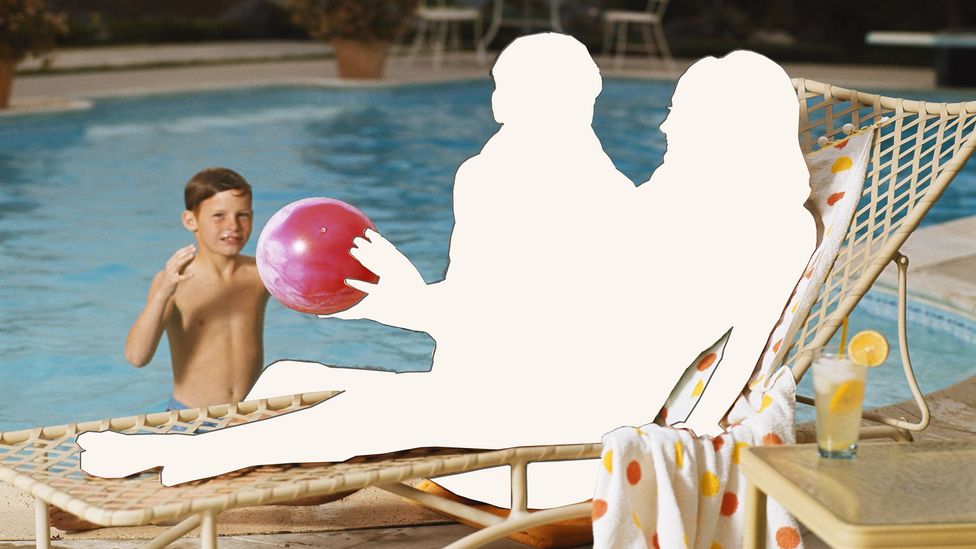
Different generations tin can have differing conceptions of family (Credit: BBC/Getty)
"There was a rigidity well-nigh family in the post-war generation" in the United kingdom of great britain and northern ireland, she says. People saw their family unit relationships in terms of concepts of duty and cocky-sacrifice, which sometimes meant people putting up with emotional or physical abuse – or non perceiving it.
For siblings, mismatched values and expectations likewise play a part. But parental favouritism is another significant gene.
Estrangement's upsides
While it could be easy to encounter estrangement equally solely negative, the reality is more complicated. Just as traditional taboos against divorce tin can keep women tethered to abusive and exploitative marriages, a dogmatic belief in the sanctity of families can go on people suffering needlessly.
"Some of the clinical literature would say, really, estrangement is maybe the best manner to deal with these types of relationships," says Gilligan. "If [relationships] are this conflictual, if they're causing this much anguish… perhaps this is the healthiest mode for parents and adult children to deal with that."
People can feel that cut out toxic relationships was the correct choice. The Stand Solitary report constitute that, for more than 80% of people afflicted, choosing to cease contact is associated with at least some positive outcomes like freedom and independence. It can exist a crucial footstep abroad from a legacy of abuse.
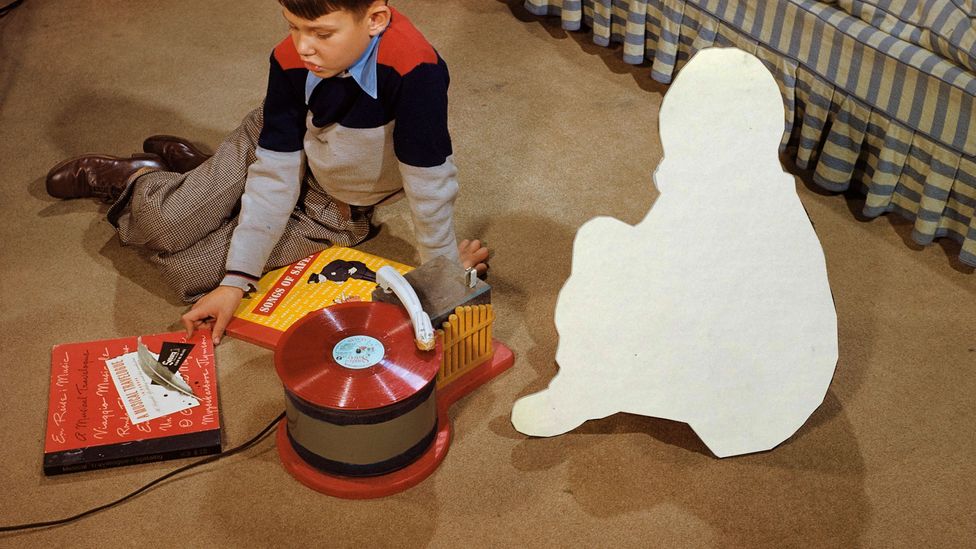
For more than lxxx% of people in i study, choosing to cease contact was associated with at least some positive outcomes, like freedom and independence (Credit: BBC/Getty)
It'south as well important to note that estrangement isn't ever permanent; people cycle in and out of distance and reunification. Nor are conflicts ever with every other member of a family. Trang Nguyen, a public wellness researcher at Johns Hopkins University, comments that amidst Vietnamese families where there'southward parental rejection of LGBT women or trans men, "commonly siblings are closer, and a supportive sibling helps a lot".
Family estrangement is painful partly because it's an ambiguous loss, 1 without finality or closure.
It's also one many other people don't empathize.
"There definitely seems to be consequences of estrangement psychologically, but peradventure the consequence is the stigma," Gilligan says. In other words, cutting off contact with a family unit member might be most painful because of the mode society misunderstands and attaches shame to it.
One online article aimed at pensioners blames individualism, divorce civilization, psychotherapy, and "a child's immaturity" for estrangement. Even therapists normally blame, dismiss or disbelieve their patients who are describing estrangement. Women are especially likely to be stigmatised. Some people limit their social interactions to avoid discussing family.
Just experts say that people who are already isolated from their families shouldn't be fabricated to feel fifty-fifty more alienated over their state of affairs – whether information technology was one over which they had piddling command, or a decision unlikely to have been reached lightly. From an bookish standpoint, the stigma also makes it hard to know exactly how many people are estranged from their families. Information technology'southward especially likely to be nether-reported in cultures where information technology's socially unacceptable to talk over family disharmonize.
Cookbook author Godbole is familiar with that stigma. "I have accepted that it may take a while for people to come up around, and some never may," she says. "I am OK with that."
Estrangement, it seems, doesn't always need to be "stock-still". Only as with other painful experiences, the shame of the state of affairs might.
--
The artworks in this article were created by Javier Hirschfeld for the BBC.
Join 900,000+ Future fans past liking united states on Facebook , or follow u.s. on Twitter or Instagram .
If you liked this story, sign up for the weekly bbc.com features newsletter , called "If Yous Just Read half dozen Things This Week". A handpicked selection of stories from BBC Future, Culture, Capital, and Travel, delivered to your inbox every Fri.
mendozahavendecked.blogspot.com
Source: https://www.bbc.com/future/article/20190328-family-estrangement-causes
0 Response to "What Percent of Trans People Are Estranged From Their Family"
Postar um comentário