what advantage did the evolution of a swim bladder provide to aquatic gnathostomes?
| Siamese fighting fish | |
|---|---|
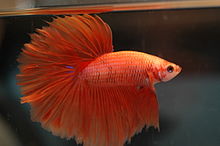 | |
| Varieties bred of Siamese fighting fish, the Halfmoon male displaying his flared opercula. | |
| Conservation condition | |
| | |
Scientific classification  | |
| Kingdom: | Animalia |
| Phylum: | Chordata |
| Class: | Actinopterygii |
| Order: | Anabantiformes |
| Family unit: | Osphronemidae |
| Genus: | Betta |
| Species: | B. splendens |
| Binomial name | |
| Betta splendens Regan, 1910 | |
The Siamese fighting fish (Betta splendens), commonly known as the betta,[ii] is a freshwater fish native to Southeast Asia, namely Kingdom of cambodia, Laos, Myanmar, Malaysia, Indonesia, Thailand, and Vietnam.[three] [iv] While in that location are 73 species of the genus Betta, only Betta splendens are eponymously chosen "bettas", due largely to their global popularity as pets: they are among the well-nigh widely available aquarium fish in the globe, due to their varied and vibrant colour, diverse morphology, and relatively low maintenance.[5] [half-dozen]
Siamese fighting fish are endemic to the key plain of Thailand[vii] [6] and have been domesticated for at least ane,000 years, amongst the longest of any fish.[8] They were initially bred for aggression and subject field to gambling matches akin to cockfighting. Bettas became known outside Thailand through Male monarch Rama Iii (1788-1851), who is said to take given some to Theodore Cantor, a Danish physician, zoologist, and botanist.[7] They showtime appeared in the Westward in the late 19th century, and within decades became popular as ornamental fish. Their long history of selective breeding has produced a wide variety of coloration and finnage, earning them the moniker, "designer fish of the aquatic world".[9]
Bettas are well known for being highly territorial, with males prone to attacking each other if housed in the aforementioned tank; without a means of escape, this volition unremarkably result in the death of one or both fish. Female bettas can also get territorial towards one another in bars spaces.[x] Bettas are exceptionally tolerant of low oxygen levels and poor h2o quality, owing to their special labyrinth organ, a characteristic unique to the suborder Anabantoidei that allows for the intake of surface air.[11]
In addition to its worldwide popularity, the Siamese fighting fish is the national aquatic animal of Thailand,[12] [13] which remains the chief breeder and exporter of bettas for the global aquarium market. Despite their abundance every bit pets, B. splendens is listed equally "vulnerable" by the IUCN, due to increasing pollution and habitat devastation.
Etymology [edit]
Exterior Southeast Asia, the name "betta" is used specifically to describe B. splendens, despite the term scientifically applying to the entire genus, which includes B. splendens and at to the lowest degree 72 other species. Betta splendens is more accurately called by its scientific name or "Siamese fighting fish" to avert defoliation with the other members of the genus.
English-speakers sometimes mispronounce betta equally "bay-tuh", after the second letter in the Greek alphabet. Even so, information technology is believed the name is derived from the Malay word ikan betta, with ikan significant "fish" and bettah referring to an aboriginal warrior tribe, which is pronounced "bet-tah".[14] [15]
Another vernacular name for Siamese fighting fish is plakat, often applied to the short-finned ornamental strains, which is derived from the Thai discussion pla kat (Thai: ปลากัด), which literally means "biting fish". This proper noun is used in Thailand for all members of the Betta genus, which share similar aggressive tendencies, rather than for any specific strain of the Siamese fighting fish. Thus, the term "fighting fish" is used to generalise all Betta species besides the Siamese fighting fish.[sixteen] [17]
Siamese fighting fish were originally given the scientific name Macropodus pugnax in 1849—literally "aggressive fish with big feet", probable in reference to their elongated pelvic fins.[15] In 1897 they were identified with the genus Betta and became known as Betta pugnax, referring to their aggressiveness. In 1909, the species was finally renamed Betta splendens upon the discovery that an existing species was already named pugnax.[fifteen]
Clarification [edit]
B. splendens usually grows to a length of most six–8 cm (2.4–3.i in).[18] Although aquarium specimens are widely known for their bright colours and large, flowing fins, the natural coloration of B. splendens is by and large light-green, chocolate-brown and grey, while the fins are brusk; wild fish exhibit strong colours only when agitated. In captivity, Siamese fighting fish have been selectively bred to display a vibrant array of colours and tail types.[19] [20]
Distribution and habitat [edit]
According to Witte and Schmidt (1992), Betta splendens is native to Southeast Asia, including the northern Malay Peninsula, primal and eastern Thailand, Kampuchea (Cambodia), and southern Vietnam. Based on Vidthayanon (2013), a Thai ichthyologist and senior researcher of biodiversity at WWF Thailand, the species is endemic to Thailand, from the Mae Khlong to Chao Phraya basins, the eastern gradient of the Cardamom mountains (Cambodia), and from the Isthmus of Kra. Similarly, a study from Froese and Pauly (2019) identifies Betta splendens every bit native to Cambodia, Laos, Thailand, and Vietnam.[4] [21] They are likewise institute throughout the neighbouring Malay Peninsula and in adjacent parts of Sumatra, likely due to human being introduction.[22]
Wherever they are found, Betta splendens more often than not inhabit shallow bodies of water with abundant vegetation, including marshes, floodplains, and paddy fields.[one] The historic prevalence of rice farming across Southeast Asia, which provided an platonic habitat for bettas, led to their discovery and subsequent domestication by humans.[21] The combination of shallow h2o and loftier air temperature causes gases to quickly evaporate, leading to a significant deficit of oxygen in the betta's natural habitat.[21] This environment likely led to the development of the lung-like labyrinth organ, which allows Siamese fighting fish—like all members of the suborder Anabantoidei—to breathe directly from the air. After, bettas tin can live and even thrive in harsher environments than other freshwater fish, which in plow leaves them with fewer natural predators and competitors.[23]
The tropical climate of the betta's natural habitat is characterised by sudden and extreme fluctuations in water availability, chemistry, and temperature.[23] H2o pH can range from slightly acidic (pH 6.9) to highly alkali metal (pH 8.ii), while air temperatures drib as low as 15 °C (59 °F) and ascent equally loftier as 40 °C (100 °F).[23] Consequently, Siamese fighting fish are highly adaptable and durable, able to tolerate a variety of harsh or toxic environments; this accounts for their popularity every bit pets, likewise equally their power to successfully colonise bodies of water all over the world.[24]
Wild bettas adopt to alive in bodies of water teeming with aquatic vegetation and surface foliage, such equally fallen leaves and water lilies.[23] The abundance of plants provides security from predators and a buffer between ambitious males, who coexist past challenge dense sections of plants as territory.[24] Such vegetation also offers protection to females during spawning and to fry during their earliest and most vulnerable stages.[24]
Invasive species [edit]
The betta's worldwide popularity has led to its release and establishment in similarly tropical areas, including southeast Australia, Brazil, Republic of colombia, the Dominican Republic, southeast United states of america, and Singapore.[21]
In January 2014, a big population of bettas was discovered in the Adelaide River Floodplain in the Northern Territory, Australia.[25] As an invasive species they pose a threat to native fish, frogs and other wetland wildlife.[25] Bettas take too become established in subtropical areas of the Usa, namely southern Texas and Florida, although an assessment by the U.Southward. Fish and Wildlife Service adamant they were no threat to natural ecosystems.[26]
Conservation status [edit]
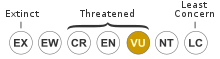
Due to their popularity, Siamese fighting fish are highly abundant in captivity. However, wild specimens are categorised by the IUCN as vulnerable, indicating the species is probable to become endangered without conservation efforts.[1] The chief threats are habitat destruction and pollution, caused past urban and agricultural development beyond central Thailand.[1]
Diet [edit]
Betta splendens is naturally carnivorous, feeding on zooplankton, small crustaceans, and the larvae of aquatic insects such as mosquitoes. Contrary to some marketing materials in the pet merchandise, bettas cannot subsist solely on vegetation or the roots of plants.[27]
Bettas tin can exist fed a varied diet of pellets, flakes, or frozen foods similar brine shrimp, bloodworms, daphnia and many others. Due to their short digestive tracts—a characteristic of most carnivores—bettas take difficulty processing carbohydrates such every bit corn and wheat, which are unremarkably used every bit fillers in many commercial fish foods.[28] Thus, regardless of the source, a proper betta diet should consist mostly of animal protein.[29]
Bettas are susceptible to overfeeding, which can pb to obesity, constipation, swim bladder illness, and other health problems; excessive food may also pollute the water. Information technology is generally brash to feed a betta at least once daily, with merely the amount of food it tin can eat within 3–5 minutes; leftover food should be removed.[29]
Some sources recommend that bettas undergo a "fast" for at to the lowest degree i day to allow food to be fully processed.[28] Bettas tin go upwardly to two weeks without eating, and it is non uncommon for them to have no appetite for one or ii days, specially following stressful episodes such every bit a water change or existence introduced into a new tank.[28]
Reproduction and early development [edit]
If interested in a female, male bettas volition flare their gills, spread their fins and twist their bodies in a dance-like performance. Receptive females will respond by darkening in color and developing vertical lines known as "breeding bars". Males build bubble nests of various sizes and thicknesses at the surface of the h2o, which interested females may examine. Nearly do this regularly even if there is no female present.
Plants or rocks that break the surface often form a base for bubble nests. The deed of spawning itself is called a "nuptial embrace", for the male wraps his torso around the female; effectually 10–forty eggs are released during each embrace, until the female person is exhausted of eggs. With each deposit of eggs, the male releases milt into the h2o, and fertilisation takes place externally. During and afterward spawning, the male uses his mouth to call up sinking eggs and place them in the bubble nest; during mating some females assist their partner, but more often will simply devour all the eggs she manages to take hold of. Once the female has released all of her eggs, she is chased away from the male person'due south territory, as she will likely eat the eggs.[30] If she is not removed from the tank, she will most likely exist killed by the male.
The eggs remain in the male'due south care. He advisedly keeps them in his bubble nest, making sure none fall to the bottom, repairing the bubble nest as needed. Incubation lasts for 24–36 hours; newly hatched larvae remain in the nest for the next two to three days until their yolk sacs are fully captivated. Later on, the fry leave the nest and the free-swimming stage begins. In this showtime period of their lives, B. splendens fry are totally dependent on their gills; the labyrinth organ, which allows the species to breathe atmospheric oxygen, typically develops at three to half dozen weeks of age, depending on the general growth rate, which can be highly variable. B. splendens tin reach sexual maturity in equally early as 4–5 months.
-

A pair spawning nether a chimera nest in a breeder'due south tank.
-

A 15-day-old, free-swimming fry is infected with Piscindoinium sp. (velvet), a common killer of betta fry in captivity.
-

I-24-hour interval-sometime fry (their yolk sacs have not even so been absorbed) in a chimera nest.
-

Betta male building a bubble nest.
History [edit]
Information on precisely how and when Siamese fighting fish were commencement domesticated and brought out of Asia is sparse.[31] Genetics imply domestication at least 1000 years ago.[32]
Fighting fish [edit]
Some people in Malaysia and Thailand are known to have nerveless wild bettas at to the lowest degree past the 19th century, observing their aggressive nature and pitting them against each other in gambling matches alike to cockfights. In the wild, betta spar for simply a few minutes before one fish retreats; domesticated betta, bred specifically for heightened aggression, can engage for much longer, with winners determined by a willingness to continue fighting; once a fish retreats, the match is over. Fights to the decease were rare, so bets were placed on the bravery of the fish rather than its survival.[33]
The popularity of these fights garnered the attention of king of Siam (Thailand) who regulated and taxed the matches and collected fighting fish of his own. In 1840, he gave some of his prized fish to Danish doc Theodore Edward Cantor, who worked in the Bengal medical service.[31] Nine years later, Cantor published the first recorded article describing these fish, giving them the name Macropodus pugnax. In 1909, British ichthyologist Charles Tate Regan institute there was a related species already named Macropodus pugnax, and thus renamed the domesticated Siamese fighting fish, Betta splendens, or "splendid fighter".[34]
Aquarium fish [edit]
Betta splendens first entered the Western aquarium trade in the late 19th century; the earliest known inflow is 1874 in France, when French aquaria expert and ichthyologist Pierre Carbonnier began importing and breeding several specimens. In 1896, German tropical fish adept Paul Matte brought the outset specimens into Federal republic of germany from Moscow, almost likely from the strain developed by Carbonnier.[31] This indicates bettas were already somewhat established in France and Russia by the plow of the 20th century. Fighting fish were besides present in Commonwealth of australia by 1904, based on an commodity written by British-born zoologist Edgar Ravenswood Waite and published by the Australian Museum in Sydney.[31] Waite indicates that Australian specimens were brought from Penang, Malaysia, near the border with Thailand.[31] He also makes reference to two articles about "fighting fish" published past Carbonnier in 1874 and 1881. Bettas may have kickoff entered the United States in 1910, via importers in California; there is also prove they were imported in 1927 from Cambodia.[31]
While it is unclear when bettas became pop in the aquarium trade, the early 20th century marked the first known divergence from centuries of convenance bettas for assailment, to instead selecting for colour, finnage, and overall beauty for ornamental purposes.[31] In 1927, an article was published in Federal republic of germany describing the long, flowing fins of the "veiltail" brood, which indicates an emphasis on aesthetic beauty.[35] In the 1950s, an American breeder created a larger and longer-finned veiltail, while around 1960, Indian breeders discovered a genetic mutation that immune for two caudal fins, producing the "doubletail" variety. Within that decade, a High german breeder created the "deltatail" characterised by its broader, triangular fins.[36]
In 1967, a group of betta breeders formed the International Betta Congress (IBC), the kickoff formal involvement group dedicated to Siamese fighting fish. The IBC aimed to breed varieties that would be healthier and more symmetrical in fins and body shape, with an emphasis on animal welfare.[36]
In the aquarium [edit]
Water [edit]
As tropical fish, bettas prefer a water temperature of around 75–82 °F (24–28 °C), but have been observed surviving temporarily at extremes of 56 °F (13 °C) to 95 °F (35 °C). When kept in colder climates, aquarium heaters are recommended, equally colder h2o weakens their allowed system and makes them susceptible to sure diseases.[37]
Bettas are likewise afflicted by the pH of the water: a neutral pH of seven.0 is platonic, just slightly higher levels are tolerable.[38] Due to their labyrinth organ, bettas can endure low oxygen levels, but cannot survive for long in unmaintained aquaria, as poor water quality makes all tropical fish more susceptible to diseases similar fin rot.[39] Thus, notwithstanding the betta'south well known tolerance of still water, a mechanical filter is considered necessary for their long-term health and longevity.[twoscore] [41] [42] [43] Similarly, live aquatic plants provide a supplemental source of filtration, in addition to crucial enrichment to the betta.[41]
Aquarium size and cohabitants [edit]
Despite frequently existence displayed and sold in pocket-size containers in the pet merchandise, bettas exercise all-time in larger environments; while they tin can survive in cups, bowls, and other confined spaces, they will be much happier, healthier, and longer-lived in a larger aquarium.[forty] [41] [42] Although some betta enthusiasts merits there is a minimum tank size, determining a strict baseline is somewhat arbitrary and subject to debate.[44] The full general consensus is that the ideal tank should exist no less than 9–19 litres (3–v US gallons), though a tank of only four litres (1 gallon) can too suffice if it is cleaned regularly—at least every other day for small, unfiltered tanks—and maintained at an acceptable temperature of 24–26 °C (75–78 °F).[45]
Although male bettas are solitary and aggressive towards one some other, they tin generally conjugate with many types of fish and invertebrates if at that place is acceptable space and hiding places. Even so, compatibility varies based on the temperament of the private betta, and it is brash to carefully supervise the betta'southward interaction with other fish. Tankmates must exist tropical, communal, nonterritorial, and not have a similar body type or long flowing fins; coldwater fish like goldfish have incompatible temperature requirements, while ambitious and predatory fish are probable to nip at the betta's fins or erode their slime coat.[46] Species that shoal, such every bit tetras and danios, are considered nearly ideal, since they usually go on to themselves and tin can endure the territorial nature of bettas with their numbers.[46] Brightly coloured fish with large fins, such as male guppies, should be avoided, as they may invite fin nipping past the male person betta. Potential tankmates should usually be added before the male betta and then they can establish their corresponding territories beforehand, rather than compete with the betta.
Female person bettas are less aggressive and territorial than males, and thus tin live with a greater diverseness of fish; for example, brightly coloured or large-finned fish will non usually disturb a female. Mostly, female fighting fish can also tolerate larger or more than numerous tankmates than males.[46] [47] However, like male bettas, a female's tolerance of other fish will vary by individual temperament.
It is non recommended to keep male and female person bettas together, except temporarily for convenance purposes, which should e'er be undertaken with caution and supervision.
Setup [edit]
Bettas are fairly intelligent and inquisitive, and thus require stimulation; otherwise they can become bored and depressed, leading to languor and a weaker immune system.[43] [48] Decorations such as plastic or live plants, rocks, caves, driftwood, and other ornaments provide crucial enrichment—provided they do not have rough textures or jagged edges, which can damage the delicate fins. In the wild, Siamese fighting fish spend most of their time concealing themselves under floating droppings or overhanging plants to avoid potential predators.[49] Floating plants and leaves can help bettas feel more than secure, while also giving males an ballast from which to build their chimera nests.[49] Arable vegetation of whatever kind is generally recommended to provide maximum security and to cater to the betta's instinct to merits protective territory.
Indian almond leaves are increasingly popular for providing something closer to the natural foliage under which bettas would hibernate in the wild. Their tannins allegedly confer several health benefits,[50] including treating certain ailments like fin rot and bladder affliction, and stabilising the pH of the water.[51]
Health and wellness [edit]
When properly kept and fed a correct diet, Siamese fighting fish generally live between 3 and 5 years in captivity, though in rare cases may live as long as 7 to x years.[52] One written report found that bettas kept in tanks of several gallons and provided with proper diet and "do"—in the grade of beingness chased around past a stick for a short period—lived over 9 years; by contrast, a command group of bettas bars to modest jars lived far fewer years.[53] A larger tank with proper filtration, regular maintenance, and an abundance of decor and hiding spaces, along with a rich, protein-based diet, increases the likelihood of a long lifespan.
Like all tropical fish in captivity, bettas are susceptible to several kinds of diseases, usually caused by bacterial, fungal, or parasitic infections. Most illnesses result from poor water quality and common cold h2o, both of which weaken the immune arrangement.[54] The iv about mutual illnesses are white spot, velvet, fin rot, and dropsy; with the exception of the latter, which is incurable, these ailments can be treated with a combination of over-the-counter fish medication, increased h2o temperature, and/or regular water changes.[55]
If betta fish are kept in communal tanks, fin nipping from other fish can lead to the onset of fin rot and this can make information technology more difficult to diagnose.[56]
Varieties [edit]
Over a century of intensive selective breeding has produced a wide variety of colours and fin types, and breeders effectually the globe continue to develop new varieties.[57] Often, the males of the species are sold preferentially in stores because of their beauty relative to the females, which about never develop fins or vibrant colours as showy as their male counterparts; still, some breeders claim to have produced females with fairly long fins and bright colours.
Betta splendens can be hybridised with B. imbellis, B. mahachaiensis, and B. smaragdina, though with the latter, the fry tend to have low survival rates. In add-on to these hybrids within the genus Betta, intergeneric hybridisation of Betta splendens and Macropodus opercularis, the paradise fish, has been reported.[58]
Colors [edit]

Wild bettas exhibit strong colours but when agitated. Over the centuries, breeders accept been able to make this coloration permanent, and a wide multifariousness of hues breed truthful. Colours among captive bettas include red, orange, yellow, bluish, steel blueish, turquoise/light-green, black, pastel, opaque white, and multi-coloured.
The betta's various colours are due to different layers of pigmentation in their skin. The layers, from deepest within to the outermost,, consists of carmine, yellow, blackness, iridescent (blue and dark-green), and metallic (not a color itself, simply reacts with the other colours). Whatsoever combination of these layers can be present, leading to a wide variety of colours inside and among bettas.[59]
The shades of blue, turquoise, and green are slightly iridescent, and tin can announced to modify color with dissimilar lighting conditions or viewing angles; this is because these colours (unlike blackness or red) are non due to pigments, but created through refraction within a layer of translucent guanine crystals. Breeders accept as well developed different colour patterns such every bit marble and butterfly, equally well as metallic shades like copper, gold, or platinum, which were obtained past crossing B. splendens to other Betta species).[60]
Some bettas will change colours throughout their lifetime, a procedure known as marbling, which is attributed to a transposon, in which a DNA sequence can modify its position within a genome, thereby altering a prison cell.[61] Koi bettas have mutated over time and in some instance change colours or patterns throughout their lifetime (known as truthful Koi), due to the defective gene that causes marbling not existence repaired in the colour layers after some time.[62]
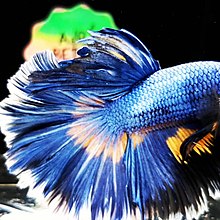
Common colours: [63]
- Super Crimson
- Super Blue
- Super Yellow
- Opaque
- Super Blackness
- Super White
- Orange
- Marble
- Candy
- Nemo
- Galaxy Nemo
- Koi
- Alien
- Copper
- Cellophane
- Gilded
- Galaxy Koi
Rarer colours:[63]
- Super Orange
- Metallic
- Turquoise
- Lavender
- Mustard Gas
- Grizzle
- Green

Colour patterns: [63]
- Solid – Entire fish is one color with no variations
- Bi-colour – Fins must exist a different colour to the body to exist a Bi-colour.
- Cambodian – Body is pale, almost colourless, and fins are a solid color
- Butterfly – Fins accept distinct bands of colours
- Marble – Irregular patterns throughout body and fin
- Piebald – Pale flesh-coloured face irrespective of *trunk colour.
- Full Mask – Face is same colour as body, rather than the natural blueprint of being darker than the trunk
- Dragon – Rich strong base colour with the scales on the main function of the body a pale iridescent
- Multicolour – Three or more than colours on the body that do non fit into whatsoever other pattern category
- Pastel – Light shade of colour seen only on the fins, body remains a flesh hue
- Koi – Judged from the top down and await like their carp counterparts. Patterns should exist uniform with clean color defining lines.
- Nemo – Either white based or orange based and have three or 4 principal colours: Orange, crimson, yellow, black
Finnage variations [edit]
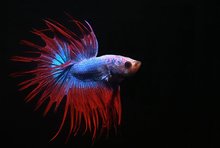
Breeders have developed several different finnage and calibration variations:[63]
- Veiltail – Extended finnage length and non-symmetrical tail; caudal fin rays commonly only carve up once; the most common tail type seen in pet stores.
- Crowntail – Fin rays are extended well beyond the membrane and consequently the tail tin have on the appearance of a crown; also chosen fringetail
- Combtail – Less extended version of the crown tail, derived from breeding crown and another finnage type
- Halfmoon – "D" shaped caudal fin that forms a 180° angle, the edges of the tail are crisp and direct
- Over-Halfmoon or Super Delta Tail – Caudal fin exceeds 180° angle (a byproduct of trying to breed half-moons), which can sometimes cause problems because the fins are as well large for the fish to swim properly[64]
- Rosetail – Variation with so much finnage that it overlaps and looks like a rose
- Plumage tail – Like to the Rosetail, with a rougher appearance
- Plakat – Short fins that resemble the fins seen in wild-type bettas
- Halfmoon plakat – Brusk-finned Halfmoon; plakat and halfmoon cross
- Double tail or Total-moon – Tail fin is duplicated into 2 lobes and the dorsal fin is significantly elongated, the two tails tin show different levels of bifurcation depending on the individual
- Delta tail – Tail spread less than that of a Halfmoon (less than 180°)
- Super Delta (aka SD or SDT) – Enhanced version of the Delta; one pace closer to the Halfmoon variety in that their tails have a bridge between 130 -170 degrees
- Half-Lord's day – Combtail with caudal fin going 180°, like a half-moon
- Elephant Ear – Pectoral fins are much larger than normal, often white, resembling the ears of an elephant
- Spade Tail – Caudal fin has a wide base that narrows to a small signal
-
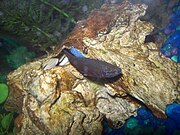
Purple and blue female.
-

Super Yellow Plakat Halfmoon male and female.
-

Cellophane Large Ear male
-

Super Orange female and male person.
-

Yellow Halfmoon
-

White Rosetail male person
Behaviour and intelligence [edit]
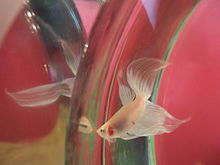
A male person attacking and flaring at his reflection in a mirror
Siamese fighting fish display circuitous behavioural patterns and social interactions, which vary amongst individual specimens.[65] [66] Inquiry indicates they are capable of associative learning, in which they adopt a consistent response following exposure to new stimuli.[66] These characteristics accept made bettas subject to intensive study by ethologists, neurologists, and comparative psychologists.[67] [68] [69]
Males and females flare or puff out their gill covers (opercula) to appear more impressive, either to intimidate other rivals or every bit an act of courtship. Flaring besides occurs when they are intimidated past movement or a modify of scene in their environments. Both sexes display pale horizontal bars if stressed or frightened. However, such color changes, common in females of whatever age, are rare in mature males due to their intensity of color. Females often flare at other females, especially when setting up a pecking order. Flirting fish conduct similarly, with vertical instead of horizontal stripes indicating a willingness and readiness to brood.
Betta splendens enjoy a decorated tank, as they seek to establish territory fifty-fifty when housed alone. They may set up a territory centered on a institute or rocky alcove, sometimes becoming highly possessive of it and ambitious toward trespassing rivals; consequently, bettas, if housed with other fish, require at to the lowest degree 45 litres (about 10 gallons). Contrary to popular belief, bettas are compatible with many other species of aquarium fish.[70] Given the proper parameters bettas will only exist aggressive towards smaller and slower fish than themselves, such equally guppies.[71]
Betta aggression has historically made them objects of gambling; 2 male fish are pitted against each other to fight, with bets placed on which one will win. Combat is characterised past fin nipping, flared gills, extended fins, and intensified colour.[72] The fight continues until 1 participant is submissive or tries to retreat; one or both fish may dice depending on the seriousness of their injuries, though bettas rarely intend to fight to the expiry. To avert fights over territory, male Siamese fighting fish are best isolated from 1 another. Males volition occasionally respond aggressively even to their ain reflections. Though this is obviously safer than exposing the fish to another male, prolonged sight of their reflection may lead to stress in some individuals. Non all Siamese fighting fish respond negatively to other males, peculiarly if the tank is big plenty for each fish to create their own designated territory.[73]
Aggression in females [edit]
In general, studies have shown that females exhibit like aggressive behaviours to males, albeit less frequently and intensely.[74] An observational study examined a grouping of female Siamese fighting fish over a menses of two weeks, during which time they were recorded attacking, flaring, and biting food. This indicated that when females are housed in pocket-sized groups, they form a stable authority order, or "pecking order". For example, the fish ranked at the top showed college levels of mutual displays, in comparison to the fish who were of lower ranks. The researchers besides found that the duration of the displays differed depending on whether an attack occurred.[75] The results of this inquiry suggest that female Siamese fighting fish warrant as much scientific study every bit males, equally they seem to have variations in their behaviours too.
Courtship behaviour [edit]
At that place has been much enquiry in the courtship behaviour between male and female Siamese fighting fish. Studies generally focus on the aggressive behaviours of males during the courting process. For example, ane study plant that when male fish are in the chimera nest phase, their aggression toward females is quite depression. This is due to the males attempting to attract potential mates to their nest, so eggs can successfully be laid.[76] Information technology has also been institute that in determining a suitable mate, females oft "overhear" on pairs of males that are fighting. When a female witnesses aggressive behaviour between males, she is more likely to be attracted to the male who won. In contrast, if a female did not "overhear" on a fight between males, she will prove no preference in mate choice. In regards to the males, the "loser" is more than likely to try to courtroom the fish who did not "eavesdrop", while the "winner" showed no preference betwixt females who "eavesdropped" and those who did not.[77]
One report considered the ways in which male Siamese fighting fish alter their behaviours during courtship when another male is present. During this experiment, a dummy female was placed in the tank. The researchers expected that males would conceal their courtship from intruders; instead, when another male person fish was present, the male was more likely to engage in courtship behaviours with the dummy female fish. When no barriers were present, the males were more likely to engage in gill flaring at an intruder male fish. The researchers ended that the male person was attempting to court the female and communicate with its rival at the aforementioned time.[78] These results bespeak the importance of considering courtship behaviour, as the literature has suggested there are many factors that can dramatically affect the ways in which both male and females can human action in courtship settings.
Metabolic costs of aggression [edit]
Studies take establish that Siamese fighting fish oft begin with behaviours that require high cost, and gradually decrease their behaviours as the encounter proceeds.[76] This indicates that Siamese fighting fish volition offset begin an come across using much metabolic free energy, but volition gradually decrease, as to not use too much free energy, thus making the encounter a waste if the fish is not successful. Similarly, researchers take plant that when pairs of male Siamese fighting fish were kept together in the aforementioned tank for a three-solar day menstruation, ambitious behaviour was most prevalent during the mornings of the first two days of their cohabitation. Notwithstanding, the researchers observed that the fighting between the 2 males decreased as the twenty-four hour period progressed. The male in the dominant position initially had metabolic advantage; although equally the experiment progressed, both fish became equal in regards to metabolic advantages.[79] In regards to oxygen consumption, ane study plant that when two male bettas fought, the metabolic rates of both fish did not differ before or during the fight. However, the fish who won showed college oxygen consumption during the evening following the fight. This indicates that ambitious behaviour in the form of fighting has long-lasting furnishings on metabolism.[80]
Behavioural effects of chemical exposure [edit]
Siamese fighting fish are popular models for studying the neurological and physiological impact of certain chemicals, such every bit hormones, since their aggression is the result of cell signalling and possibly genes.[81]
1 study investigated the result of testosterone on female Siamese fighting fish. Females were given testosterone, which resulted in changes to fin length, body coloration and gonads that resembled typical male fish. Their ambitious behaviour was establish to be elevated when interacting with other females, but reduced when interacting with males. The researchers so immune the females to interact with a command group of unaltered females; when the female person fish stopped receiving testosterone, those who were exposed to the normal females still exhibited male person-typical behaviours. In dissimilarity, the female person fish who were kept isolated did not continue to showroom the male person typical behaviours later testosterone was discontinued.[82]
Some other study exposed male Siamese fighting fish to endocrine-disrupting chemicals. The researchers were curious if exposure to these chemicals would affect the ways in which females respond to the exposed males. It was establish that when shown videos of the exposed males, the females favoured those who were not exposed to the endocrine-disrupting chemicals, and avoided those males that were exposed. The researchers concluded that exposure to these chemicals can negatively touch the mating success of male Siamese fighting fish.[83]
A psychology report used male person Siamese fighting fish to investigate the effects of fluoxetine, an SSRI used primarily as an antidepressant in humans. Siamese fighting fish were selected as prime models due to having comparable serotonin transporter pathways, which accounts for their aggression. It was institute that when exposed to fluoxetine, male Siamese fighting fish exhibited less ambitious behaviour than is feature of their species.[84] Similarly, research has institute that bettas are responsive to serotonin,[68] dopamine,[69] and GABA.[85]
Genetics [edit]
Despite its commercial popularity, lilliputian is known about the Betta splendens genome. Electric current agreement is so limited that in that location is little bear witness for the genetic basis of basic traits, including sex determination.[86] A recent review article[86] argued for increased scientific investigation into the genome of the Siamese fighting fish, and listed several areas of interest which are paraphrased below:
- monophyly of the genus Betta including a unmarried-versus-multiple origin of mouthbrooding;
- the state of cryptic variety and evolutionary forces driving speciation in the betta lineage;
- responsive genes or genetic interaction to parental care, behavioural aggression, pigmentation and other betta biology; and
- preservation technology for betta as insurance against accidental loss of biodiversity this century.
Additionally, betta fish take been used in several studies to appraise the impacts of diverse ecology contaminants, including oil.[87] [88] [89] Improved understanding of the betta genome would allow for more accurate generalisations from these studies. Lastly, the betta fish is an excellent candidate for a model organism, particularly for aggression and pigmentation development, due to their extreme phenotypes in these areas.
Currently, the complete B. splendens chromosomal[90] and mitochondrial[91] genomes take been sequenced. Both genomes have yet to be annotated, though a roadmap for future efforts has been outlined.[86] Notably, the mitochondrial genome for the peaceful betta, P. imbellis, has also been sequenced,[92] potentially allowing for meaningful comparison betwixt species in the future.
Phylogeny and cryptic variety [edit]
There are many species in the genus Betta, the bulk of which are very morphologically similar. Within Thailand alone there are twelve nominal species[86] with new species being discovered every 5–ten years.[93] Past efforts to differentiate Betta species have been based on observable morphology, but given their visible similarity, this arroyo has masked much of the cryptic diverseness in the genus. Contempo speciation efforts accept included employ of DNA barcoding to differentiate species, specifically comparison the CO1 gene of the mitochondrial genome, resulting in new theories about the relatedness between species and allowing for the construction of new phylogenetic copse.[94]
The morphological similarity between species that can be distinguished genetically suggests that species radiation with ambiguous multifariousness occurred in the Betta lineage. Current theories nearly the species radiations and speciation have into account the geographic considerations of their native habitat of Thailand, and propose that the speciation is best described by a model of either allopatric or parapatric speciation.[86]
Genetics of betta biology [edit]
Aggression [edit]
B. splendens are known for their intense assailment, which has resulted from intense selective pressures imposed upon them from many generations of artificial selection. Fighting strains of B. splendens have been bred for aggression for over six centuries due to the civilization surrounding fighting betta fish and betting money on the results.[95] This has genetically differentiated them from their wild-type counterparts - fighting strains of B. splendens have been shown to exist significantly more aggressive than wild bettas,[20] and in addition show differential responses in cortisol product in new environments.[96]
The farthermost genetically-driven aggression in fighting strains of B. splendens and their differences from the withal-observable wild-blazon makes them an excellent candidate for a model organism through which to study the genetic ground for assailment.
At present, use of the betta fish as a model organism for studying assailment is in its beginning phases. Little is known nigh the genetic basis of aggression in betas, though differential degrees of aggression have been observed in unlike domesticated betta populations.[97]
Inquiry to appointment [edit]
At that place is evidence that the genetic basis for aggression in betta fish is not exclusively sex-linked - a recent study institute that female person bettas of the fighting strain show significantly higher levels of aggression than their female wild-blazon counterparts, despite the fact that historically only male bettas have been used in fights and thus artificially selected for aggression.[xx] Still these results are of limited usefulness, given the lack of scientific consensus on the nature of sex determination in bettas.
A recent study found that a fighting pair of bettas volition synchronise their cistron expression profiles, with item emphasis on 37 co-expression gene modules, some of which were only synchronised afterwards a certain elapsing of time had been spent fighting.[98]
Work to identify the genetic basis for aggression has also been performed more by and large in other model species, such as zebrafish.[99] These studies have identified dozens of candidate genes in their corresponding model organisms which could serve equally starting points for inquiry into aggression in betta fish. However, more progress must be made on the annotation of the betta genome before this is feasible.
Pigmentation [edit]
See biological pigment
Due to the incredible variation in pigmentation of adult bettas and visible pigment in developing embryos, bettas are an bonny model organism for studying the genetic basis for coloration.[100] Additionally, producing a specific color on need would exist of great interest to the commercial betta fish industry, every bit the price of a fish is largely determined by its coloration. Prices for attractively coloured fish tin can be high - single fish with the colours of the Thai flag was sold for over $one,500.[101]
The genetic basis for the synthesis and regulation of pigmentation in teleost fish is generally poorly understood,[86] [6] and bettas are no exception. Most piece of work in this area has been done on other model organisms such as zebrafish or African cichlid fish, however every bit with aggression, piece of work done with other model organisms to place candidate genes will be tremendously helpful in identifying the genetic basis of pigmentation in bettas.
Work to date [edit]
In 1990, genetic differences (polymorphisms at several loci) were found between 4 different color varieties of bettas,[102] though the variations were noted to exist small. Afterward experiments confirmed the presence of genetic variation in hatchery stocks in Thailand, with depression average numbers of alleles per locus and high heterozygosity rates.[103]
Notable color phenotypes in B. splendens include the marbled phenotype and the color changing phenotype, the latter of which changes colour over the course of its lifetime. While theories for the genetic ground of these phenotypes exist,[61] scientific evidence for the genetic basis of these phenomena are slim to nonexistent.
Other genetic work [edit]
Some of the few candidate genes identified in the literature specific to bettas are immune related genes, which were establish in the first whole-torso transcriptome of B. splendens obtained by high-throughput sequencing.[104]
In pop culture [edit]
- The Fisheries Department of Thailand is promoting pla kat, or Siamese fighting fish, as the national fish. Department main Adisorn Promthep said that the proposal will be submitted to the National Identity Part under the Prime number Government minister's Office for approval. He said that once the condition is recognised, fighting fish farming would be promoted, which would generate money and create jobs. He added that credible records show that pla kat of the Betta splendens species are native to Thailand and were first collected for fighting during the reign of King Rama Three.[105]
- The titular character in the novel Rumble Fish and subsequent moving-picture show adaptation is a Siamese fighting fish.[106] In both, the character Motorcycle Boy is fascinated with the creatures and dubs them "rumble fish". He speculates that if the fish were to be set gratis in the river, they wouldn't behave so aggressively. A common misconception regarding keeping B. splendens is that they should alive in vases or bowls. However, this has been proven to impairment their health, life expectancy, and cause negative behavioural changes.[107]
- A scene in the James Bond picture show From Russian federation with Love shows three Siamese fighting fish in an aquarium every bit the villain Ernst Stavro Blofeld likens the modus operandi of his criminal organisation, SPECTRE, to i of the fish that observes every bit the other two fight to the death, then kills the weakened victor.[108]
- In 2020, a Siamese fighting fish kept in a home aquarium in Nippon named Lala was livestreamed successfully 'completing' a re-create of Pokemon Sapphire by use of a light amplification by stimulated emission of radiation that followed the fish and triggered button inputs mapped on a grid behind the tank.[109] Lala'south playthrough of the game was carried out over four months, commencing in June 2020 and concluding in November,[110] and the experiment likewise resulted in the discovery of a glitch that softlocked the game that had previously gone undiscovered.[111]
- For the Miss Grand International 2020 competition held in Bangkok in 2021, Laos used a costume inspired by the fish, which some Thai citizens were unhappy with, challenge that the fish costume was a copy of another costume designed be worn by Miss Universe Thailand – Amanda Obdam – in Miss Universe 2020.[112] [113]
See as well [edit]
- National symbols of Thailand
References [edit]
- ^ a b c d Vidthayanon, C. (2011). "Betta splendens". IUCN Ruddy Listing of Threatened Species. 2011: e.T180889A7653828. doi:10.2305/IUCN.UK.2011-1.RLTS.T180889A7653828.en . Retrieved 12 Nov 2021.
- ^ ibcadmin. "About Betta splendens – International Betta Congress". Retrieved 24 March 2021.
- ^ "All About The Betta Fish". IDZ AQUARIUM . Retrieved 24 March 2021.
- ^ a b "Siamese Fighting Fish (Betta splendens): Ecological Adventure Screening Summary" (PDF). U.Due south. Fish and Wildlife Service. 2019.
- ^ "Fish Identification". www.fishbase.org . Retrieved xiii November 2020.
- ^ a b c Adisorn Monvises, Bunlung Nuangsaeng, Namkang Sriwattanarothai, Bhinyo Panijpan. "The Siamese fighting fish: Well-known more often than not merely little-known scientifically]" (PDF). Found for Innovation and Development of Learning Procedure, Mahidol University, Rama 6 Road, Bangkok 10400, Thailand.
{{cite web}}: CS1 maint: multiple names: authors list (link) - ^ a b Sermwatanakul, Amonrat (2019). "Capacitating the local farmers to enhance global marketing of Thailand's national aquatic beast, the Siamese fighting fish" (PDF) . Retrieved 25 March 2021.
- ^ Roth, Annie (14 May 2021). "The 1,000-Twelvemonth Secret That Made Betta Fish Beautiful". The New York Times. ISSN 0362-4331. Retrieved 16 May 2021.
- ^ About Betta splendens International Betta Congress.
- ^ "Guidelines released for keeping Fighters". Practical Fishkeeping Magazine . Retrieved 15 March 2017.
- ^ Rehn, Jeremy (October 2019). "Betta Fish: The Dazzling Siamese Fighting Fish". livescience.com . Retrieved 13 Nov 2020.
- ^ Express, Bangkok Post Public Company. "Siamese fighting fish confirmed as national aquatic fauna". bangkokpost.com . Retrieved 29 July 2019.
- ^ AFP (5 February 2019). "Thailand makes Siamese fighting fish national aquatic beast". Business concern Standard India . Retrieved 29 July 2019.
- ^ "The Fascinating Origin of Betta Fish and Other Fun Betta Facts". world wide web.aqueon.com . Retrieved 14 Nov 2020.
- ^ a b c Dr. Martin Brannah, The Betta Bible, p. 16.
- ^ "Betta splendens – Siamese Fighting Fish (Micracanthus marchei)". Retrieved ane April 2019.
- ^ "Betta Fish Information; Plakats, Veiltails, Halfmoon, Crowntail". Americanaquariumproducts.com . Retrieved i April 2019.
- ^ Froese, Rainer; Pauly, Daniel (eds.) (2014). "Betta splendens " in FishBase. February 2014 version.
- ^ "Bubbling & Bettas: Tail Types and Patterns". Bubbles & Bettas. Archived from the original on 22 November 2016. Retrieved 31 January 2017.
- ^ a b c Ramos, A.; Gonçalves, D. (8 August 2019). "Artificial option for male person winners in the Siamese fighting fish Betta splendens correlates with loftier female aggression". Frontiers in Zoology. sixteen (1): 34. doi:ten.1186/s12983-019-0333-x. ISSN 1742-9994. PMC6686523. PMID 31406496.
- ^ a b c d Dr. Martin Brammah, The Betta Bible, p. 26
- ^ ibcadmin. "Nigh Betta splendens – International Betta Congress". Retrieved 20 November 2020.
- ^ a b c d Dr. Martin Brammah, The Betta Bible, p. 27.
- ^ a b c Dr. Martin Brammah, The Betta Bible, p. 28.
- ^ a b Bray, Dianne. "Siamese Fighting Fish, Betta splendens". Fishes of Australia . Retrieved 29 September 2014.
- ^ Siamese Fighting Fish (Betta splendens) Ecological Gamble Screening Summary
- ^ "betta food". Bettatalk.com . Retrieved i August 2012.
- ^ a b c "Best Betta Fish Nutrient | What to Feed & How Much". Bettafish.org . Retrieved 14 November 2020.
- ^ a b "Your Betta Needs More than Than a Bowl - Veterinary Medicine at Illinois". University of Illinois Higher of Veterinary Medicine . Retrieved 14 Nov 2020.
- ^ "Betta Fish Spawn: Guide from Preparing Convenance Tank to Feeding the Fry". Leaffin.com. 8 November 2017. Retrieved 1 April 2019.
- ^ a b c d e f m Martin Brammah, The Betta Bible, pp. 29-30.
- ^ Roth, Annie (fourteen May 2021). "The 1,000-Year Secret That Fabricated Betta Fish Cute". The New York Times . Retrieved twenty May 2021.
- ^ "Betta Fish | Advocating For Proper Care & Information". Bettafish.org . Retrieved fourteen November 2020.
- ^ "Betta Origins". Betta Fish Center. Retrieved 11 June 2011.
- ^ Martin Brammah, The Betta Bible, p. 31.
- ^ a b Martin Brammah, The Betta Bible, p. 31-32.
- ^ "Ideal Water Temperature for Betta Fish | The Aquarium Club". Theaquarium.club . Retrieved 19 Nov 2017.
- ^ "Betta water". Bettatalk.com . Retrieved 5 October 2015.
- ^ Caller, Steven. "Betta Fish Introduction". My Betta Fish. Retrieved 1 August 2012.
- ^ a b "Your Betta Needs More Than a Bowl - Veterinary Medicine at Illinois". Academy of Illinois College of Veterinary Medicine . Retrieved 15 November 2020.
- ^ a b c "Betta Fish Care Sheet & Supplies | PetSmart". www.petsmart.com . Retrieved 17 November 2020.
- ^ a b Betta Fish Care. Petco
- ^ a b "Betta Fish Are Suffering past the Millions". PETA Headlines . Retrieved 17 November 2020.
- ^ "AMAZONAS Videos: Bettas in the Wild - What They Tell Usa Near Tank Size". Reef To Rainforest Media, LLC | CORAL Magazine | Microcosm Publishing. 26 March 2014. Retrieved thirteen November 2020.
- ^ Gordon, H. Betta Pals Betta Guide.
- ^ a b c Robert (v July 2019). "50 Betta Fish Tank Mates: The Definitive Compatibility Listing 2020". Fishkeeping World . Retrieved 16 November 2020.
- ^ "ten Safety Betta Fish Tank Mates & Companions". Bettafish.org . Retrieved 16 Nov 2020.
- ^ "Fish are not office decorations". Retrieved 17 November 2020.
- ^ a b 5 Tips to Ameliorate the Wait of Your Betta Aquarium. Bettaboxx.
- ^ "All Almost Indian Almond Leaves For Betta Fish". Betta Source. 28 December 2019. Retrieved 17 November 2020.
- ^ Mari (1 June 2014). "Indian Almond Leaves | How and when to utilize them!". Aquariadise . Retrieved 17 November 2020.
- ^ Martin Brammah. The Betta Bible: The Art and Scientific discipline of Keeping Bettas, pp. 23-24.
- ^ Martin Brammah. The Betta Bible: The Art and Scientific discipline of Keeping Bettas, pp. 23-24 (citing Walt Maurus, A Consummate Guide to Bettas)
- ^ Martin Brammah. The Betta Bible: The Fine art and Scientific discipline of Keeping Bettas, pp. 306-313.
- ^ Martin Brammah. The Betta Bible: The Art and Science of Keeping Bettas, pp. 314-315.
- ^ "What Causes Fin Rot In Bettas". fishkeepingacademy.com. 27 Baronial 2021. Retrieved eleven September 2021.
- ^ Robert (22 May 2019). "Types of Betta Fish 2020: Which is the Perfect One for Yous?". Fishkeeping Earth . Retrieved 17 November 2020.
- ^ "Betta Splendens & Siamese Fighting Fish". Retrieved 1 April 2019.
- ^ Griffin, Gerald (January 2016). "Betta Primer". Amazonas.
- ^ "Metallics and Masked". Betty
Splendens.
com. - ^ a b "Archived copy" (PDF). Archived from the original (PDF) on 22 October 2014. Retrieved 22 October 2014.
{{cite spider web}}: CS1 maint: archived copy every bit championship (link) - ^ "Koi vs Marble Betta". Worldbettas.com. 2 May 2018. Retrieved 1 April 2019.
- ^ a b c d "Colors & Patterns". Bettasource.com . Retrieved four October 2015.
- ^ "Grundlegendes über die Fischgabel" (in German). Fischbesteck24.de.
- ^ "betta". science.umd.edu . Retrieved 17 November 2020.
- ^ a b Pennisi, Elizabeth (17 June 2020). "Fighting fish synchronize their moves—and their genes". Science | AAAS . Retrieved 17 November 2020.
- ^ Bronstein, Paul 1000. (1998). "Agonistic Sequences and the Assessment of Opponents in Male Betta splendens". American Journal of Psychology. 265 (2): 163–177. doi:x.2307/1422809. JSTOR 1422809.
- ^ a b Clotfelter ED, O'Hare EP, McNitt MM, Carpenter RE, Summers CH. Serotonin decreases assailment via five-HT1A receptors in the fighting fish Betta splendens. Pharmacol Biochem Behav. 2007;87(2):222–31. pmid:17553555
- ^ a b Clotfelter ED, McNitt MM, Carpenter RE, Summers CH. Modulation of monoamine neurotransmitters in fighting fish Betta splendens exposed to waterborne phytoestrogens. 2010:933–43.
- ^ "7 Excellent Betta Tank Mates for Your Siamese Fighting Fish". Retrieved 20 Baronial 2015.
- ^ "Betta Fish Facts". Earthsfriends.com . Retrieved 20 August 2015.
- ^ "Siamese fighting fish | fish". Encyclopedia Britannica . Retrieved 15 November 2020.
- ^ "Complete Betta Fish Care Guide (Tank, Diet & Aggression)". Retrieved 3 March 2016.
- ^ Elcoro, Mirari; Da Silva, Stephanie; Lattal, Kennon (2008). "Visual Reinforcement in the Female person Siamese Fighting Fish, Betta Splendens". Journal of the Experimental Analysis of Beliefs. 90 (1): 53–60. doi:ten.1901/jeab.2008.90-53. PMC2441580. PMID 18683612.
- ^ Elwood, R.W.; Rainey, C.J. (1983). "Social System and Aggression Within Small Groups of Female Siamese Fighting Fish, Betta Splendens". Aggressive Behavior. 9 (iv): 303–308. doi:10.1002/1098-2337(1983)9:iv<303::aid-ab2480090404>3.0.co;2-5.
- ^ a b Forsatkar, Mohammad; Nematollahi, Mohammad; Bron, Culum (August 2016). "Male Siamese Fighting Fish Utilise Gill Flaring As The Get-go Display Towards Territorial Intruders". Journal of Ethology. 35: 51–59. doi:10.1007/s10164-016-0489-1. S2CID 34997965.
- ^ Herb, Brodie M.; Biron, Suzanne A.; Kidd, Michael R. (2003). "Courtship Past Subordinate Male person Simease Fighting Fish, Betta Splendens: Their Response to Eavesdropping and Niave Females". Behaviour. 140 (1): 71–78. doi:ten.1163/156853903763999908. JSTOR 4536011.
- ^ Dzieweczynski, Teresa L.; Lyman, Sarah; Poor, Elysia A. (2008). "Male Siamese Fighting Fish, Betta Splendens, Increment Rather Than Conceal Courting Behaviour When a Rival is Present". Ethology. 115 (2): 186–195. doi:10.1111/j.1439-0310.2008.01602.ten.
- ^ Haller, Jozesf (1994). "Biochemical Costs of a Iii Day Long Cohabitation in Dominant and Submissive Male Betta Splenons". Aggressive Behavior. twenty (5): 369–378. doi:10.1002/1098-2337(1994)20:5<369::assistance-ab2480200504>iii.0.co;2-f.
- ^ Castro, Nidia; Ros, Albert F.H.; Becker, Klaus; Oliveira, Rui F. (2006). "Metabolic Costs of Aggressive Behaviour in the Siamese Fighting Fish, Betta Splendons". Aggressive Behavior. 32 (5): 474–480. doi:ten.1002/ab.20147. hdl:10400.12/1283.
- ^ Vu, Trieu-Duc; Iwasaki, Yuki; Shigenobu, Shuji; Maruko, Akiko; Oshima, Kenshiro; Iioka, Erica; Huang, Chao-Li; Abe, Takashi; Tamaki, Satoshi; Lin, Yi-Wen; Chen, Chih-Kuan (17 June 2020). "Behavioral and encephalon- transcriptomic synchronization between the ii opponents of a fighting pair of the fish Betta splendens". PLOS Genetics. 16 (6): e1008831. doi:ten.1371/periodical.pgen.1008831. ISSN 1553-7404. PMC7299326. PMID 32555673.
- ^ Badura, Lori Fifty.; Freidman, Herbert (1988). "Sex activity Reversal in Female Betta Splendons as a Function of Testosterone Manipulation and Social Influence". Periodical of Comparative Psychology. 102 (3): 262–268. doi:x.1037/0735-7036.102.three.262. PMID 3180734.
- ^ Dzieeczynski, Teresea L.; Kane, Jessica 50. (2017). "The Bachorlette: Female Siamese Fighting Fish Avoid Males Exposed to an Estrogen Mimic". Behavioural Processes. 140: 169–173. doi:10.1016/j.beproc.2017.05.005. PMID 28478321. S2CID 5293321.
- ^ Eisenreich, Benjamin; Greene, Susan; Szalda-Petree, Allen (2017). "Of Fish and Mirrors: Fluoxetine Disrupts Aggression and Learning For Social Rewards". Physiology & Beliefs. 173: 258–262. doi:10.1016/j.physbeh.2017.02.021. PMID 28237550. S2CID 9855266.
- ^ Yang W, Wang Y, Zhu C, et al. De novo transcriptomic characterization of Betta splendens for identifying sex-biased genes potentially involved in aggressive behavior modulation and EST-SSR maker evolution. bioRxiv; 2018.
- ^ a b c d e f Srikulnath, Kornsorn; Singchat, Worapong; Laopichienpong, Nararat; Ahmad, Syed Farhan; Jehangir, Maryam; Subpayakom, Navapong; Suntronpong, Aorarat; Jangtarwan, Kornsuang; Pongsanarm, Tavun; Panthum, Thitipong; Ariyaraphong, Nattakan (February 2021). "Overview of the betta fish genome regarding species radiations, parental care, behavioral assailment, and pigmentation model relevant to humans". Genes & Genomics. 43 (2): 91–104. doi:10.1007/s13258-020-01027-ii. ISSN 1976-9571. PMID 33515118. S2CID 231762344.
- ^ Bautista, Naim M.; Pothini, Tanushri; Meng, Kelly; Burggren, Warren W. (February 2019). "Behavioral consequences of dietary exposure to crude oil extracts in the Siamese fighting fish (Betta splendens)". Aquatic Toxicology. 207: 34–42. doi:10.1016/j.aquatox.2018.11.025. PMID 30513419. S2CID 56145573.
- ^ Forsatkar, Mohammad Navid; Nematollahi, Mohammad Ali; Amiri, Bagher Mojazi; Huang, Wen-Bin (November 2014). "Fluoxetine inhibits aggressive behaviour during parental care in male person fighting fish (Betta splendens, Regan)". Ecotoxicology. 23 (nine): 1794–1802. doi:10.1007/s10646-014-1345-0. ISSN 0963-9292. PMID 25213287. S2CID 23546762.
- ^ Tudor, M. Scarlett; Lopez-Anido, Rebecca North.; Yocius, Charly A.; Conlin, Sarah M.; Hamlin, Heather J. (October 2019). "Ecologically relevant arsenic exposure alters female mate preference and feet-like beliefs in Betta splendens". Heliyon. five (10): e02646. doi:x.1016/j.heliyon.2019.e02646. PMC6820098. PMID 31687501.
- ^ Fan, Guangyi; Chan, Judy; Ma, Kailong; Yang, Binrui; Zhang, He; Yang, Xianwei; Shi, Chengcheng; Police force, Henry; Ren, Zhitao; Xu, Qiwu; Liu, Qun (11 July 2018). "Chromosome-level reference genome of the Siamese fighting fish Betta splendens, a model species for the study of aggression". GigaScience. 7 (eleven). doi:10.1093/gigascience/giy087. ISSN 2047-217X. PMC6251983. PMID 30010754.
- ^ Song, Ying-Nan; Xiao, Gui-Bao; Li, Jiong-Tang (1 Nov 2016). "Complete mitochondrial genome of the Siamese fighting fish ( Betta splendens )". Mitochondrial DNA Part A. 27 (6): 4580–4581. doi:10.3109/19401736.2015.1101573. ISSN 2470-1394. PMID 26703926. S2CID 3841112.
- ^ Ahmad, Syed Farhan; Laopichienpong, Nararat; Singchat, Worapong; Suntronpong, Aorarat; Pongsanarm, Tavun; Panthum, Thitipong; Ariyaraphong, Nattakan; Bulan, Jakaphan; Pansrikaew, Tanawat; Jangtarwan, Kornsuang; Subpayakom, Navapong (1 October 2020). "Side by side-generation sequencing yields complete mitochondrial genome assembly of peaceful betta fish, Betta imbellis (Teleostei: Osphronemidae)". Mitochondrial DNA Part B. 5 (four): 3856–3858. doi:10.1080/23802359.2020.1841582. ISSN 2380-2359. PMC7759254. PMID 33458245.
- ^ Monvises, Adisorn; Nuangsaeng, Bunlung; Sriwattanarothai, Namkang; Panijpan, Bhinyo (2009). "The Siamese fighting fish: Well-known generally but trivial-known scientifically". ScienceAsia. 35 (1): eight. doi:10.2306/scienceasia1513-1874.2009.35.008. ISSN 1513-1874.
- ^ Panijpan, Bhinyo; Kowasupat, Chanon; Laosinchai, Parames; Ruenwongsa, Pintip; Phongdara, Amornrat; Senapin, Saengchan; Wanna, Warapond; Phiwsaiya, Kornsunee; Kühne, Jens; Fasquel, Frédéric (December 2014). "Southeast Asian oral fissure-brooding Betta fighting fish (Teleostei: Perciformes) species and their phylogenetic relationships based on mitochondrial COI and nuclear ITS1 DNA sequences and analyses". Meta Gene. 2: 862–879. doi:10.1016/j.mgene.2014.10.007. PMC4287851. PMID 25606468.
- ^ Smith, Hugh M. (1945). "The fresh-water fishes of Siam, or Thailand". Bulletin of the United States National Museum (188): one–622. doi:10.5479/si.03629236.188.ane. hdl:10088/10206. ISSN 0362-9236.
- ^ Verbeek, Peter; Iwamoto, Toshitaka; Murakami, Noboru (January 2008). "Variable stress-responsiveness in wild type and domesticated fighting fish". Physiology & Behavior. 93 (1–2): 83–88. doi:x.1016/j.physbeh.2007.08.008. PMID 17884114. S2CID 8930322.
- ^ Panijpan, Bhinyo; Sriwattanarothai, Namkang; Laosinchai, Parames (2020). "Wild Betta fighting fish species in Thailand and other Southeast Asian countries". ScienceAsia. 46 (4): 382. doi:10.2306/scienceasia1513-1874.2020.064. ISSN 1513-1874.
- ^ Vu, Trieu-Duc; Iwasaki, Yuki; Shigenobu, Shuji; Maruko, Akiko; Oshima, Kenshiro; Iioka, Erica; Huang, Chao-Li; Abe, Takashi; Tamaki, Satoshi; Lin, Yi-Wen; Chen, Chih-Kuan (17 June 2020). Bell, Alison (ed.). "Behavioral and brain- transcriptomic synchronization between the two opponents of a fighting pair of the fish Betta splendens". PLOS Genetics. 16 (6): e1008831. doi:10.1371/periodical.pgen.1008831. ISSN 1553-7404. PMC7299326. PMID 32555673.
- ^ Filby, Amy L; Paull, Gregory C; Hickmore, Tamsin FA; Tyler, Charles R (2010). "Unravelling the neurophysiological ground of aggression in a fish model". BMC Genomics. xi (1): 498. doi:x.1186/1471-2164-eleven-498. ISSN 1471-2164. PMC2996994. PMID 20846403.
- ^ Carey, Alexis N.; Lyvers, Benjamin H.; Ferrill, Rachel N.; Johnson, Rachel Fifty.; Dumaine, Anne Marie; Sly, Belinda J. (June 2016). "Evolution of Betta splendens embryos and larvae reveals variation in pigmentation patterns". Zygote. 24 (3): 396–400. doi:10.1017/S0967199415000313. ISSN 0967-1994. PMID 27172056. S2CID 43321556.
- ^ Bangkok, Associated Printing in (17 November 2016). "Siamese fighting fish in colours of Thai flag sells for £1,200". The Guardian . Retrieved 25 March 2021.
- ^ Khoo, Gideon; Loh, Eric Y.F.; Lim, Tit Meng; Phang, Violet P.East. (1997). "Genetic variation in different varieties of Siamese fighting fish using isoelectric focusing of sarcoplasmic proteins". Aquaculture International. 5 (vi): 537–549. doi:10.1023/A:1018357400571. S2CID 19715819.
- ^ Meejui, Oamduen; Sukmanomon, Srijanya; Na-Nakorn, Uthairat (November 2005). "Allozyme revealed substantial genetic diversity betwixt hatchery stocks of Siamese fighting fish, Betta splendens, in the province of Nakornpathom, Thailand". Aquaculture. 250 (1–2): 110–119. doi:x.1016/j.aquaculture.2005.03.020.
- ^ Amparyup, Piti; Charoensapsri, Walaiporn; Samaluka, Nusree; Chumtong, Parichat; Yocawibun, Patchari; Imjongjirak, Chanprapa (April 2020). "Transcriptome analysis identifies allowed-related genes and antimicrobial peptides in Siamese fighting fish (Betta splendens)". Fish & Shellfish Immunology. 99: 403–413. doi:x.1016/j.fsi.2020.02.030. PMID 32081810. S2CID 211230022.
- ^ "'Pla gud' to exist national fish". Bangkok Post. 6 November 2018. Retrieved 6 November 2018.
- ^ Hinton, S.E. (2013). Rumble Fish. Delacorte Press. ISBN978-0385375689.
- ^ "Why betta bowls are bad". Aquariadis.come . Retrieved eighteen January 2018.
- ^ Moore, Roger (2012). "The Spector of Evil". Bond on Bond: The Ultimate Book on l Years of Bond Movies . Michael O'Mara Books. ISBN978-1843178613.
- ^ Nov 2020, Demi Williams 09. "Pokemon Ruby and Sapphire has been beaten by a Siamese fighting fish". gamesradar . Retrieved thirty December 2020.
- ^ "Pokemon fans pet fish unbelievably manages to beat game all by itself". Dexerto. seven November 2020. Retrieved 30 December 2020.
- ^ "Pokemon Glitch Discovered by Pet Fish". GAMING . Retrieved 30 Dec 2020.
- ^ Taylor, Maya (23 March 2021). "Furious pageant fans accuse Laos of copying Thai contestant'due south fishy costume". Thaiger . Retrieved 27 March 2021.
- ^ coconutsbangkok (22 March 2021). "Thai pageant fans fighting mad over 'stolen' fish costume | Coconuts Bangkok". Coconuts . Retrieved 27 March 2021.
Further reading [edit]
- Simpson, M. J. A. (1968). "The display of the Siamese fighting fish Betta splendens". Animate being Behaviour Monographs. 1: i–73. doi:x.1016/S0066-1856(68)80001-nine.
- Thompson, T (1966). "Operant and Classically-Conditioned Aggressive Behavior in Siamese Fighting Fish". American Zoologist. 6 (4): 629–741. doi:10.1093/icb/vi.4.629. PMID 6009828.
External links [edit]
- Bettas at Curlie
mendozahavendecked.blogspot.com
Source: https://en.wikipedia.org/wiki/Siamese_fighting_fish
0 Response to "what advantage did the evolution of a swim bladder provide to aquatic gnathostomes?"
Postar um comentário